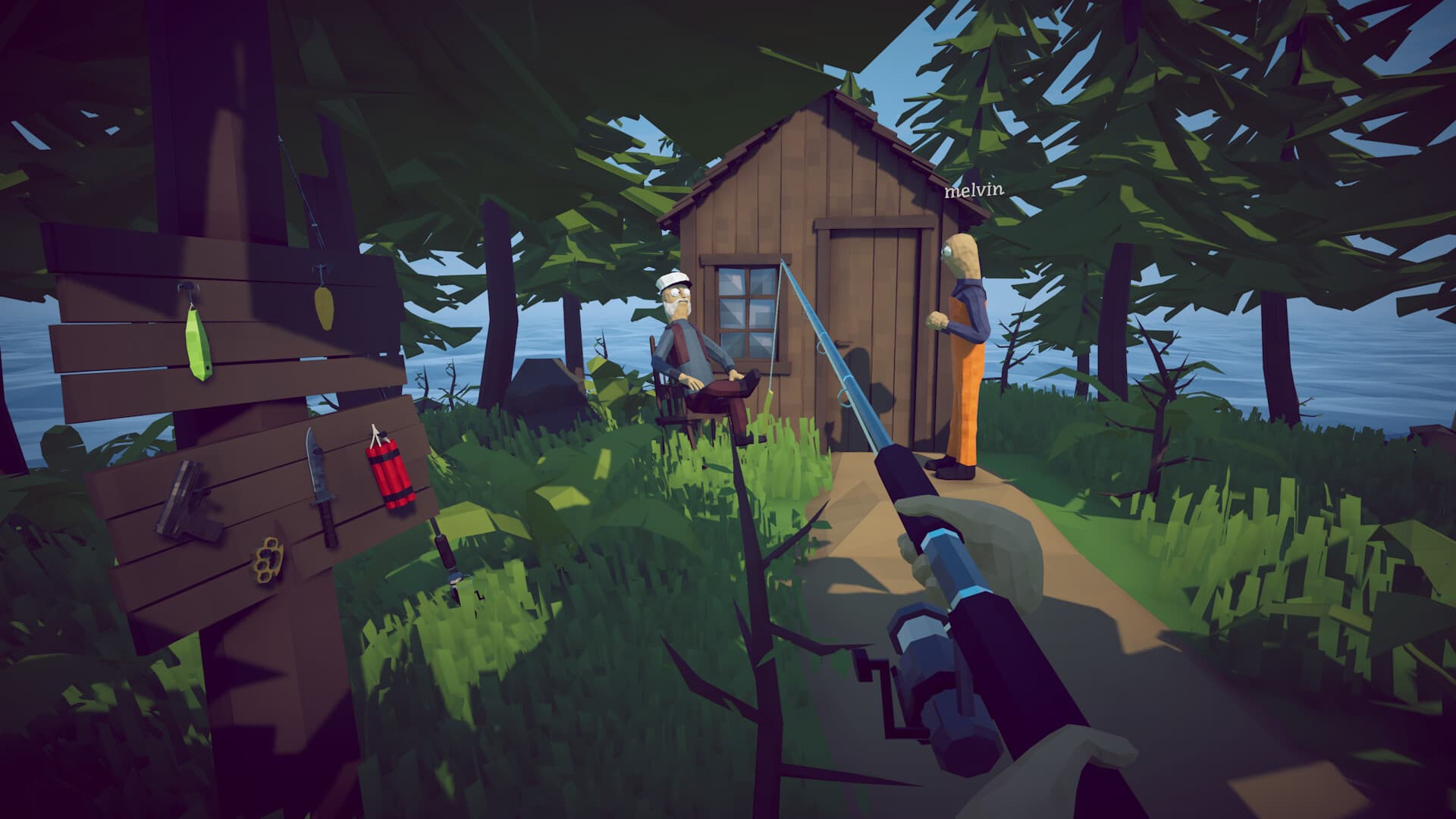
The safest beginner route is simple: talk to the local quest character first, hunt only after you know the task, keep important catches and trophies, and invest early upgrades in one reliable weapon. Sell or gamble only after checking that an item is not needed for progression. When a new path opens, confirm it through the travel interface instead of assuming the island order.
Read the local task before hunting
The first recorded beginner session shows that How to Fish uses local characters to explain what is needed next. Speaking to the task giver before roaming prevents wasted catches and makes the boss chain easier to understand. It also gives you a reference point when the game presents several similar creature categories.
Treat the task text as version-specific evidence. A video or guide can tell you what worked in a captured build, but the live quest prompt controls your current session. If the wording and a guide disagree, preserve the requested item and recheck the official patch notes before gambling or selling it.
Separate progress items from money items
Successful catches can feed several systems. The official store says you can sell, collect, or gamble fish, while community footage shows that boss trophies and task catches have a different purpose. The important habit is to pause before converting any unusual item into cash or a wager.
Boss trophies are especially easy to mishandle because they appear after a successful fight, when players naturally expect a reward. The transcript warns that the trophy is not ordinary meat and should be returned to the task giver. In co-op, choose a carrier before the fight ends so the item does not disappear into an unclear team handoff.
Build one dependable weapon first
The achievement Fully Equipped confirms that attachments are a real progression target. Community beginner advice recommends concentrating early attachments on the weapon you can use consistently rather than creating several incomplete setups. This reduces the number of variables when you are learning target movement and trick-shot timing.
A community Pufferfish run used an SMG with a compensator, laser, and expanded ammunition. That proves one recorded setup worked for that player, not that the parts are optimal across every patch or encounter. Use it as an example of a focused build and compare it with what is actually available in your shop and inventory.
Use recovery and protect each catch
The beginner transcript identifies leeches as ground pickups that can restore health. Carrying recovery into a boss sequence is safer than assuming the arena will provide everything you need. Use recovery during a stable opening rather than while a fast phase is already forcing movement.
Seagulls can steal exposed catches in recorded gameplay, so do not leave a valuable result unattended while browsing menus or chasing another target. Secure the item, complete the hand-in, or move it to the appropriate collection flow. This small discipline protects more progress than a speculative damage table.
Learn trick shots through finishing blows
The Steam description states that trick shots increase earnings, and the achievement list includes a 5x killscore goal plus a 360 no-scope goal. Community testing adds that the final shot should complete the kill if you want the scoring result to register. A stylish setup that does not finish the creature may not deliver the outcome you expected.
Practice on a weaker, lower-risk target rather than learning during a boss phase. Reduce the target first, create a predictable angle, perform the rotation or no-scope action, and secure the finishing hit. Then check the on-screen result or achievement instead of assuming the multiplier based on appearance alone.
Progress through quests, bosses, and routes
The official game description connects quests and bosses with new islands. A reusable progression pattern is task, accepted catch, boss trigger, fight, trophy, hand-in, and travel check. The Pufferfish chain provides a documented example because the community transcript shows accepted endangered fish leading to carrot bait and then to the boss encounter.
Patch 1.0.5 fixed travel to a locked island, so accidental or exploit-driven movement is not a reliable shortcut. Patch 1.0.4 made the final-island path easier, showing that route difficulty can change. Do not publish or rely on a fixed island count unless the current game or an official source confirms it.
Patch 1.0.9 adds Easy and Hard without changing the prior Default setting. Easy gives creatures 25% less health and 50% less damage, while Hard gives them 25% more health and 25% more damage. Record the selected difficulty when comparing route time, recovery use, or boss preparation.
Make co-op roles explicit
How to Fish supports online co-op, and Patch 1.0.4 expanded lobbies to as many as eight players. Larger groups do not remove the need for coordination. Assign damage, recovery, spacing, and trophy-carrying responsibilities in plain language before starting a boss.
Private lobby and session controls were added in Patch 1.0.5. Use them when you want a stable learning run with known players and a clear hand-in plan. These are Steam session features; they do not establish Xbox or PlayStation crossplay.
Patch 1.0.9 also adds a Steam connection diagnostic and publishes a hopeful save-corruption fix. Restart Steam before troubleshooting, use the relay indicator for connection problems, and continue preserving explicit save and quest records rather than assuming the fix recovered an already damaged file.
Check the source date before following details
How to Fish launched on August 20, 2026 and received several quick updates. Boss balance, travel rules, achievement behavior, and visual quality changed within days. Any tactic tied to a phase or route should therefore be read with its review date.
This guide is based on the official store, official news, public achievements, and recorded community play. Exact creature rosters, gun statistics, island names, skin odds, and gambling formulas are not filled in without proof. That boundary keeps the beginner route useful even while the detailed database remains incomplete.
After each session, write down the quest completed, trophy returned, route unlocked, and patch version. This small record makes it easier to recover after a co-op disagreement or a changed update. It also shows which open question needs a new in-game capture instead of another guess.
The official loop connects money, better gear, quests, bosses, and new islands. Use that sequence as the backbone of a first save rather than chasing an unverified roster immediately. When a local task conflicts with an old video, preserve the requested item, read the current prompt, and treat the live patched interaction as the next fact to document.
Sources used
These links support the facts and community-tested operations on this page.
Official first-session game loop, gear, quests, bosses, and islands.
official10 Things You Need to Know in How to FishCommunity-tested quest-item, trophy, upgrade, and co-op guidance.
community-videoHow to Fish news and updatesOfficial patch changes affecting progression and lobby size.
officialHow to Fish Patch 1.0.9Official difficulty settings, Steam diagnostic, and save-fix notes.
officialHow to Fish achievementsOfficial completion goals used as durable progress checks.
official