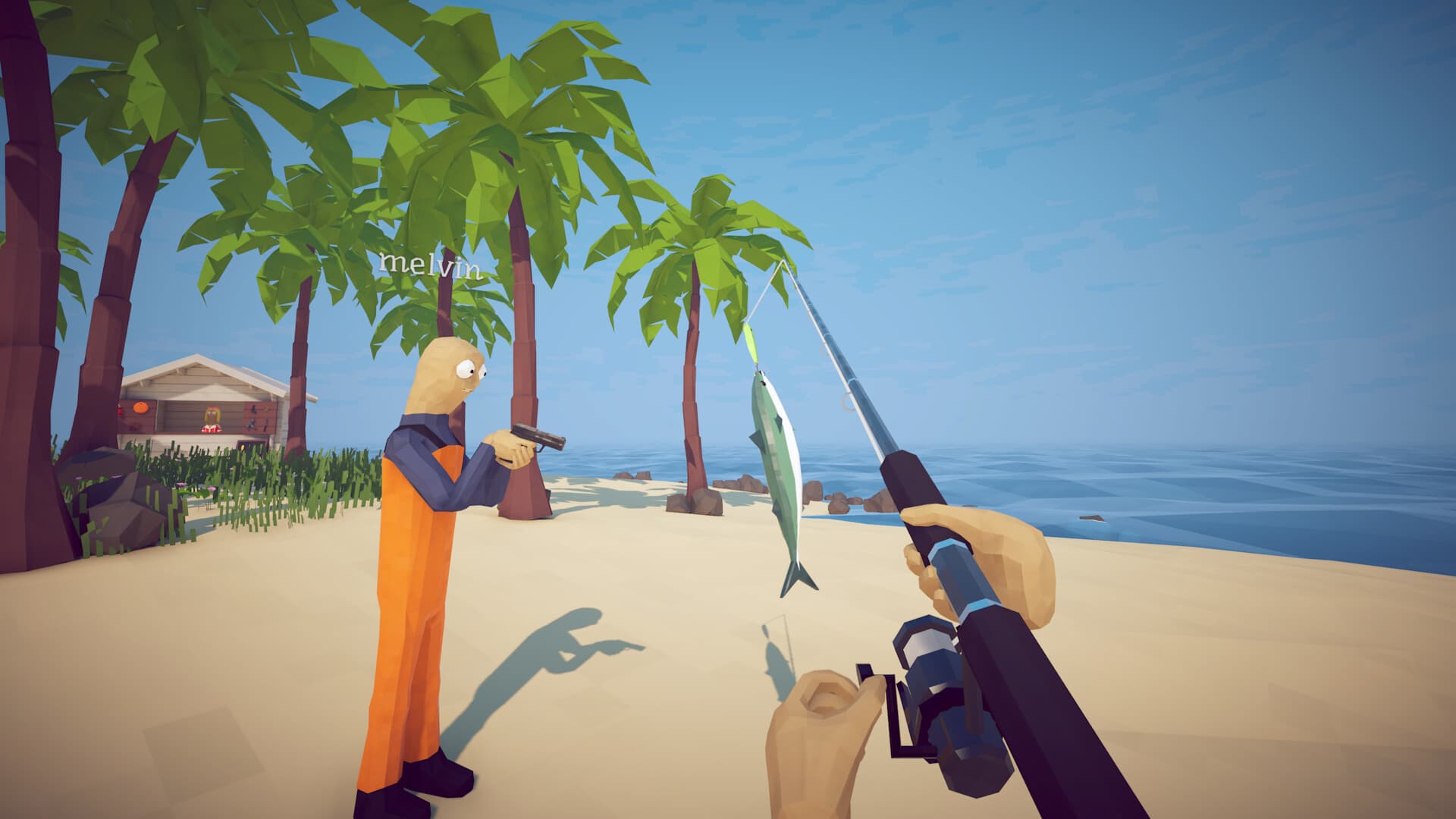
To complete the recorded Pufferfish chain, give the task character a normal Needlefish, Bowlfish, or Seahorse, keep the carrot reward, and use it to start the encounter. Bring recovery and one weapon you have already upgraded. During the fight, create distance for the rolling phase, adapt when poison begins around half health, then recover the tail trophy and return it.
The direct quest and fight answer
The encounter begins before the arena. You must first read the local request and supply an accepted endangered fish. The community transcript shows that this hand-in produces the carrot connected to the Pufferfish boss.
The fight then rewards control more than blind pursuit. Use open space and terrain to read the roll, maintain damage when the boss is vulnerable, and expect a poison-related change near half health. The exact health number and damage formula are not verified, so judge the transition by visible behavior.
Bring an accepted endangered fish
The captured quest accepts Needlefish, Bowlfish, or Seahorse. One normal accepted catch is enough for the demonstrated hand-in. A drip version was rejected in the recording, which means the special collection form should not be assumed to replace the base task item.
Confirm the creature name in your game and keep it away from selling or gambling flows. If you catch a drip version, protect it for Fishipedia and continue looking for the normal request. In co-op, announce who carries the hand-in so a teammate does not convert it accidentally.
Receive and use the carrot bait
The carrot is the next link in the documented chain. Treat it as boss bait or a trigger item rather than generic inventory value. Keep it with the player responsible for starting the fight and inspect the interaction prompt before consuming anything.
If the trigger does not work, recheck the quest state and the item name. Do not repeatedly spend resources based on a video title alone. A later patch could move an interaction or change the prerequisite, so the live prompt controls your current run.
Prepare a labelled community loadout
The recorded successful approach uses an SMG with a compensator, laser, and expanded ammunition. It is useful evidence because the exact parts are visible in a working run. It is not proof that this setup has the highest damage or that every player must copy it.
The broader beginner transcript recommends concentrating attachments on one dependable weapon. Follow that principle if your inventory differs. Carry leeches or other verified recovery available in your route, reload before the trigger, and make sure the group understands who is drawing movement and who is maintaining damage.
Control the rolling phase with space and terrain
The Pufferfish uses a rolling attack that can rapidly close distance. The community tactic is to keep enough room to read its approach and use terrain to disrupt a direct line. Move early rather than waiting for contact, then turn back to deal damage during a stable opening.
Terrain use is a tactic, not a guaranteed permanent lock. Collision and pathing may change with updates, and a position that worked once can fail from a different angle. Keep an escape route and do not stand still solely because an old clip shows the boss caught on geometry.
Survive the half-health poison phase
Around half health in the recorded run, the encounter adds a poison trail or poison-related pressure. This reduces safe space and makes repeated backward movement less reliable. Watch the arena, cross hazardous areas deliberately, and save recovery for moments when the boss is not already rolling into you.
In co-op, avoid stacking every player on the same path. Spread enough to preserve movement lanes while keeping the boss readable. Call the phase change when it appears so the trophy carrier and lower-health players can prioritize survival.
Recover and return the tail trophy
The documented result is a tail trophy. Community beginner guidance stresses that a boss trophy is not ordinary meat, so it should not be sold or gambled. Pick it up quickly and return it to the relevant task character to complete the progression check.
Decide ownership before the finishing blow. Then verify the hand-in, any route unlock, and any achievement separately. If one player sees completion and another does not, document the session rather than assuming shared credit.
Patch 1.0.4 and tactics that may change
Patch 1.0.4 nerfed Pufferfish and Whale, which proves that launch-period boss balance changed. The same update expanded lobbies and made the final-island path easier. Older videos can still demonstrate phase logic, but their difficulty and timing may not match the live build.
Patch 1.0.9 adds another comparison variable. Easy reduces creature health by 25% and damage by 50%, while Hard increases both creature health and damage by 25%. Treat recorded timings, recovery use, and terrain success as difficulty-specific instead of presenting one run as universal.
Use official news as the first check when the fight feels different. Revalidate community loadouts and terrain behavior after each balance note. This guide intentionally avoids fixed health, damage, and guaranteed safe-spot claims because the collected evidence does not support them.
A clean retry checklist
Before retrying, confirm the quest is active, the carrot is available, recovery is carried, and the primary weapon is ready. Choose a player to watch the roll, a player to call poison, and a player to secure the trophy. This turns a failed attempt into a controlled test rather than a repeated scramble.
After the run, record the game version and any tactic that changed. Keep observations labelled as community-tested until an official note confirms them. That distinction makes the guide useful without pretending a single captured strategy is permanent law.
For the strongest evidence, capture the quest hand-in, carrot interaction, phase transition, tail pickup, and final return in one continuous run. A complete sequence reveals whether a failure came from preparation, combat, or progression. It also makes post-patch comparison much easier than isolated clips.
The community recording supports this full sequence, while the official patch notes support only the fact that Pufferfish balance changed. Keep those roles separate. The video can show what worked in its captured build, but a later official note should trigger a new test before the same timing, terrain behavior, or loadout is described as current.
Sources used
These links support the facts and community-tested operations on this page.
Recorded quest fish, carrot bait, loadout, combat phases, and tail return.
community-videoHow to Fish news and updatesOfficial Pufferfish balance change and version-sensitive patch context.
officialHow to Fish Patch 1.0.9Official Easy and Hard creature health and damage modifiers.
officialHow to Fish on SteamOfficial quest, boss, trophy, weapon, and island progression loop.
official10 Things You Need to Know in How to FishCommunity-tested recovery, weapon focus, and trophy handling.
community-video